
Research & Publications
Books
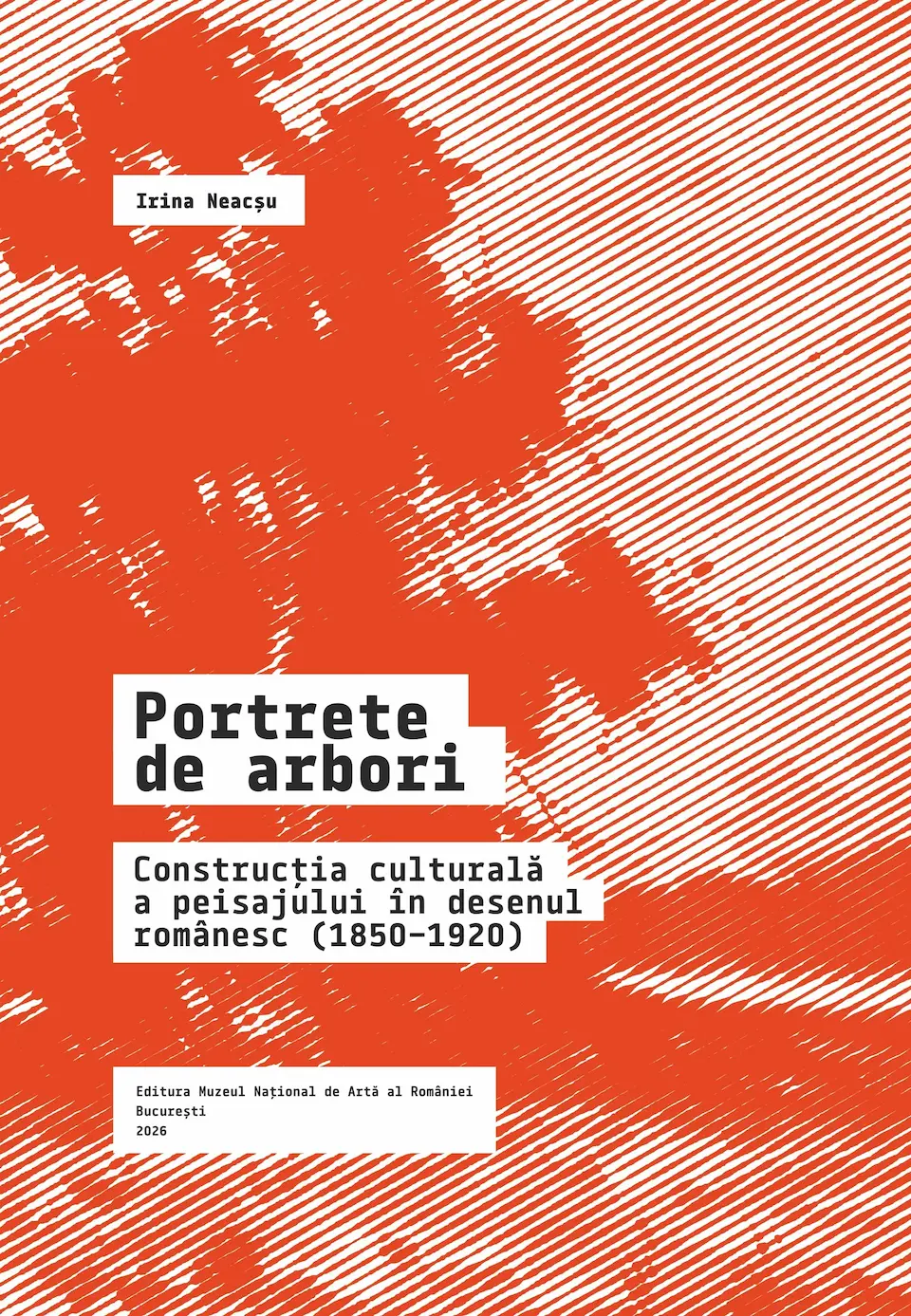
Tree Portraits
The Cultural Construction of Landscape in Romanian Drawing (1850–1920)
Portrete de arbori. Construcția culturală a peisajului în desenul românesc (1850–1920)
Author: Irina Neacșu
Publisher: National Museum of Art of Romania Publishing House
Bucharest, 2026
ISBN: 978-630-6629-10-7
Language: Romanian
Scientific Consultant: Raluca Velisar
Editor: Aureliana Ionescu
Graphic Design: Alisa Aramă
Foreword: Ruxandra Demetrescu
This publication was co-funded by the Administration of the National Cultural Fund of Romania and supported by the Bonte Foundation.
Tree Portraits explores the cultural construction of landscape through the representation of trees in Romanian drawing between 1850 and 1920. Bringing together art-historical research and a rich selection of works from major Romanian museum collections, the book examines how trees gradually emerged from the background of landscape compositions to become individual subjects of artistic observation, expression, and cultural identity.
Rather than approaching landscape as a purely natural setting, the study investigates the historical processes through which nature was observed, documented, interpreted, and ultimately transformed into cultural imagery. Drawing is central to this investigation, understood not only as an artistic medium but also as an instrument of thought, exploration, and documentation. From preliminary sketches and topographical records to increasingly autonomous works of art, the book traces the evolving relationship between artists, their surroundings, and the territories they sought to represent.
Structured around three major historical and geographical contexts—Transylvania, the Romanian Principalities, and the period surrounding the Great Union of 1918—the publication follows different artistic traditions and their intersections with political change, cultural identity, education, travel, and the emergence of modern landscape painting. Artists such as Franz Neuhauser the Younger, Carol Popp de Szathmári, Henric Trenk, Theodor Aman, Ion Andreescu, Nicolae Grigorescu, Ștefan Luchian, and Rodica Maniu-Mützner contribute to a complex visual history of the Romanian landscape.
At the intersection of art history, environmental humanities, and cultural landscape studies, Tree Portraits also invites a contemporary ecological reading of historical images. Beyond their artistic significance, drawings become visual archives of environments that have since changed or disappeared, preserving traces of the relationship between people, territory, and memory.
The volume brings together the findings of the Bonte Fellowship (2025–2026), undertaken at the Department of Graphic Arts of the National Museum of Art of Romania, alongside Irina Neacșu's doctoral research at the National University of Arts in Bucharest.
The project was developed in partnership with the National Museum of Art of Romania, the Brukenthal National Museum, the Bucharest Municipality Museum, the Brașov Art Museum, and the Cluj-Napoca Art Museum.
The publication is accompanied by the exhibition Tree Portraits, curated by Irina Neacșu and presented at the National Museum of Art of Romania from 5 November 2026 to 14 March 2027.

Transylvanian Flowers
Historical Intersections Between Nature and Culture in Transylvania
Flori transilvane. Intersecții istorice între natură și cultură pe teritoriul Transilvaniei
Author: Irina Neacșu
Publisher: Litera Publishing House
Bucharest, 2024
ISBN: 978-630-342-310-4
Language: Romanian
Foreword: Dr. John Akeroyd
Editor: Sabrina Florescu
Cover Design: Flori Zahiu-Popescu
Cover Illustration: Irina Neacșu
Transylvanian Flowers explores the historical relationship between nature and culture in Transylvania, tracing the ways in which plants have shaped the region's landscapes, artistic traditions, architecture, and everyday life. Bringing together botanical observation, historical research, and visual documentation, the book approaches vegetation not merely as a natural presence, but as an essential component of cultural identity and collective memory.
Rooted in the author's experience as a botanical artist and architect, the publication unfolds as a journey through the cultural landscapes of Transylvania, particularly the historically Saxon territories of southern Transylvania. From wildflower meadows, forests, and cultivated gardens to fortified villages, domestic interiors, and traditional crafts, the book examines how natural environments have influenced human settlements, aesthetic preferences, and local practices over centuries.
Structured in three main sections, the study moves from the experience of travelling through Transylvania to an exploration of its characteristic landscapes and vegetation, before focusing on the representation of plants in decorative arts. Oaks, lime trees, pines, medicinal herbs, hemp, clover, and grapevines reveal the connections between ecological conditions, agriculture, traditional knowledge, and rural economies.
A particular emphasis is placed on botanical motifs in Transylvanian decorative heritage. Through the study of tulips, carnations, pomegranates, and roses, the book traces the circulation of ornamental patterns across geographical and cultural boundaries, revealing the influence of European and Oriental artistic traditions on Saxon, Hungarian, and Romanian visual cultures. Embroidery, painted furniture, ceramics, and architectural ornament become witnesses to a long history of cultural exchange, adaptation, and transformation.
Combining historical images, botanical illustrations, photography, and field observations, Transylvanian Flowers offers an interdisciplinary perspective on the region's material and intangible heritage. The publication also reflects on the vulnerability of traditional landscapes and the gradual disappearance of the knowledge, practices, and communities that have shaped them.
Rather than presenting Transylvania as a picturesque remnant of the past, the book considers its landscapes as living cultural constructions, continuously transformed through the interaction of nature, human activity, migration, and memory. At the intersection of art history, ethnobotany, architecture, and cultural landscape studies, it invites a renewed understanding of the relationship between plants, places, and the identities they sustain.
Articles
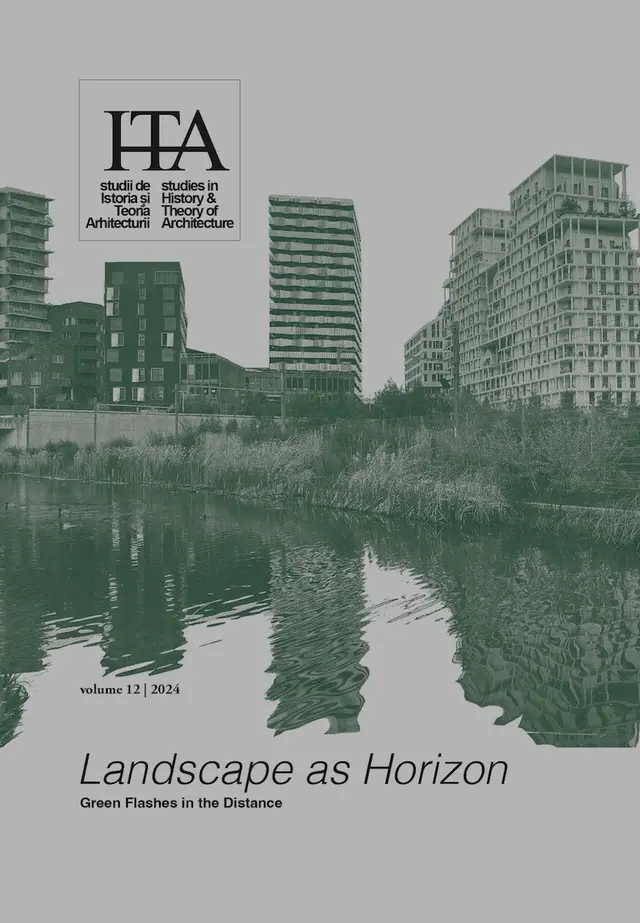
Studies in History & History of Architecture
December 2024
Review of Venice and the Anthropocene, an ecocritical guide that frames Venice as a fragile ecosystem and links its history to decolonization.

Argument 16
November 2024
Argument 16 focuses on the Postures of the Space-Volumetric Form. My perspective on the subject introduces the Kinesthetic Approach of Space, with Walking as aesthetic practice.

The Botanical Artist
March 2023
The American Society of Botanical Artists’s Journal vol. 29 was a great opportunity to share my experience with the study of alpine plants during the artist residency at Denver Botanic Gardens.

Bulletin of the Transilvania University of Brasov
Brasov. Series IV: Philology and Cultural Studies, February
2022
Following the Appalachian-Carpathian Conference in 2022, my collaboration with Dr. John Akeroyd as keynote speakers developed into an approach with focus on the cultural landscape of Transylvania.

Fabulafia
2022 - 2024
Text an illustration for the column "Tales from the Herbarium" in Fabulafia, a children's magazine published in Romania.
Contact
Here to inspire & connect with you.
Email
Instagram
Online Shop
